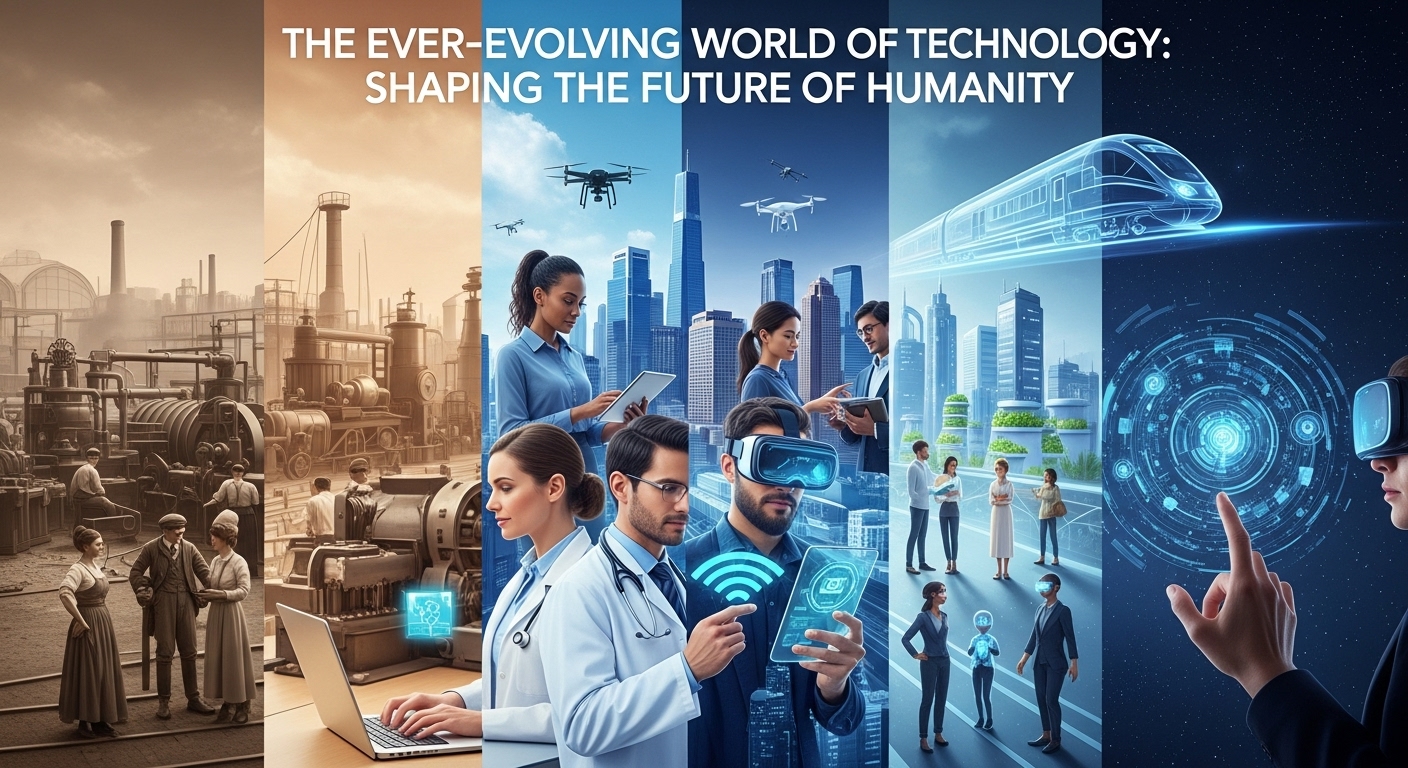

The tech world is evolving at an extraordinary pace, and the innovations coming to life today are laying the foundation for a future that will transform the way we live, work, and interact with the world around us. With advancements in fields like artificial intelligence, quantum computing, and augmented reality, it’s clear that we are on the brink of a technological renaissance. In this blog post, we will dive into some of the most groundbreaking technologies shaping our future and explore how they are influencing our daily lives and industries.
Artificial Intelligence: The Brainpower Behind Tomorrow’s Tech
Artificial Intelligence (AI) has moved beyond being a buzzword and is becoming an integral part of everyday life. AI, at its core, enables machines to mimic human cognitive functions like learning, problem-solving, and decision-making. This intelligence allows computers to perform tasks that once required human intervention, with increased accuracy and efficiency.
In healthcare, AI is already making waves by analyzing vast amounts of medical data to assist doctors in diagnosing diseases, predicting outcomes, and even personalizing treatment plans for patients. In the automotive industry, AI is powering autonomous vehicles, allowing cars to drive themselves and reduce human error on the roads. Even in our personal lives, AI is working behind the scenes in smart assistants like Siri, Alexa, and Google Assistant, helping us manage our day-to-day tasks.
As AI continues to advance, we will see its applications spread to almost every industry. The future of AI holds limitless possibilities, including helping us make better decisions, boosting productivity, and even creating new forms of entertainment and creativity.
Quantum Computing: Unlocking the Unsolvable
Quantum computing is one of the most exciting and mind-bending technologies currently being explored. Unlike traditional computers, which process information as binary data (0s and 1s), quantum computers utilize qubits that can exist in multiple states at once. This unique property allows quantum computers to perform calculations at speeds that are inconceivable with classical machines.
While quantum computing is still in its early stages, it promises to revolutionize industries such as cryptography, drug development, and material science. In the field of cryptography, quantum computers could break current encryption systems, pushing us to rethink how we secure sensitive data. In healthcare, quantum computing could dramatically speed up the process of discovering new drugs by simulating molecular structures more efficiently than traditional computers ever could.
Although there are still technical hurdles to overcome, quantum computing holds the potential to solve problems that are currently out of reach, and its widespread adoption could change the way we approach everything from scientific research to data security.
Blockchain: Beyond Cryptocurrencies
When most people think of blockchain, cryptocurrencies like Bitcoin and Ethereum come to mind. However, blockchain is a technology that has far-reaching applications beyond digital currencies. At its core, blockchain is a decentralized ledger system that records transactions across multiple computers, ensuring that data cannot be altered or tampered with without consensus from the network.
This characteristic makes blockchain a powerful tool for creating transparency and trust in industries that rely on secure and verified transactions. In finance, blockchain is already being used for faster and more secure financial transactions. In supply chain management, blockchain allows companies to track products from creation to delivery, ensuring authenticity and reducing fraud.
The potential applications of blockchain extend far beyond finance. In sectors like healthcare, education, and government, blockchain is being explored as a way to provide secure and transparent systems for managing everything from patient records to voting systems. As the technology matures, we can expect blockchain to transform industries in ways we haven’t yet fully realized.
The Internet of Things (IoT): Connecting the World Around Us
The Internet of Things (IoT) refers to the interconnected network of everyday objects, devices, and systems that communicate and share data over the internet. These devices range from smart thermostats and wearables to industrial sensors and connected vehicles, and they are rapidly becoming an integral part of our daily lives.
In the home, IoT devices enable greater control and convenience. Smart homes are becoming increasingly common, with systems that allow you to control your lights, temperature, and even appliances from your smartphone. In cities, IoT is helping to optimize traffic flow, improve waste management, and reduce energy consumption.
As more devices become connected, the possibilities for IoT continue to grow. The future of IoT will see smarter homes, more efficient cities, and businesses operating with greater data-driven insights. However, the rise of IoT also brings concerns around security and privacy, as the interconnectedness of devices creates more potential entry points for cybercriminals. It will be crucial to address these challenges as IoT continues to expand.
5G: Revolutionizing Connectivity
5G is the next generation of mobile network technology, and it promises to radically transform the way we connect to the internet. With speeds up to 100 times faster than 4G, 5G will enable a new era of connectivity, allowing for seamless streaming, faster downloads, and more reliable connections.
The potential impact of 5G goes far beyond improved mobile phone performance. In industries like healthcare, autonomous driving, and manufacturing, 5G will enable real-time data transmission and instant communication between machines, leading to more efficient operations and new innovations. In healthcare, for example, 5G can enable remote surgeries, allowing doctors to perform procedures from anywhere in the world with virtually no lag.
5G also plays a critical role in the development of smart cities, where everything from traffic lights to waste management systems can communicate in real time. With 5G, the world will become even more connected, allowing for a level of integration that will improve everything from urban living to rural connectivity.
Augmented Reality and Virtual Reality: New Dimensions of Interaction
Augmented Reality (AR) and Virtual Reality (VR) are two immersive technologies that are changing the way we interact with digital content. While VR creates entirely virtual worlds, AR overlays digital information on top of the real world, enhancing our perception of reality.
In the gaming and entertainment industries, VR has already created revolutionary experiences, allowing users to fully immerse themselves in digital environments. In retail, AR is helping consumers visualize products in their homes before making a purchase, while in education, both AR and VR are providing interactive learning experiences that were once unimaginable.
The possibilities for AR and VR go far beyond entertainment. In healthcare, VR is being used for surgical training, while AR helps surgeons with real-time data during procedures. In the workplace, AR can assist with on-the-job training, and VR can facilitate remote collaboration, making it feel as though teams are in the same room.
The Future of Work: Embracing Digital Transformation
Technology is not only changing the way we interact with the world around us but also how we work. Automation, artificial intelligence, and cloud computing are transforming industries and reshaping the workforce. Many routine tasks that once required human input are now being automated, allowing workers to focus on more strategic and creative tasks.
The rise of remote work, accelerated by the COVID-19 pandemic, has led to a surge in demand for digital tools that enable communication and collaboration. Cloud computing, in particular, has made it easier than ever for teams to work together, regardless of location. As technology continues to advance, we can expect more flexible work environments and increased reliance on digital platforms to facilitate work, communication, and productivity.
However, this digital transformation also brings challenges, including the need for reskilling the workforce and addressing the ethical implications of automation. As technology continues to evolve, workers and companies must adapt to new ways of working and ensure that the benefits of innovation are accessible to everyone.
Conclusion: A Tech-Driven Future Awaits
The future of technology is full of promise, with innovations like AI, quantum computing, blockchain, IoT, 5G, and AR/VR already reshaping our world. As these technologies continue to evolve, we can expect even more transformative changes in the years to come.
While the potential for progress is immense, we must also consider the challenges these technologies present, including privacy concerns, security risks, and the need for ethical considerations. By approaching these innovations with care and responsibility, we can create a future where technology enhances lives, solves complex problems, and opens up new opportunities for all.
The tech-driven world of tomorrow is unfolding today, and it’s up to all of us to embrace the possibilities and navigate the challenges that come with it. The future is here—and it’s more exciting than ever.