Introduction: The Age of Technological Transformation
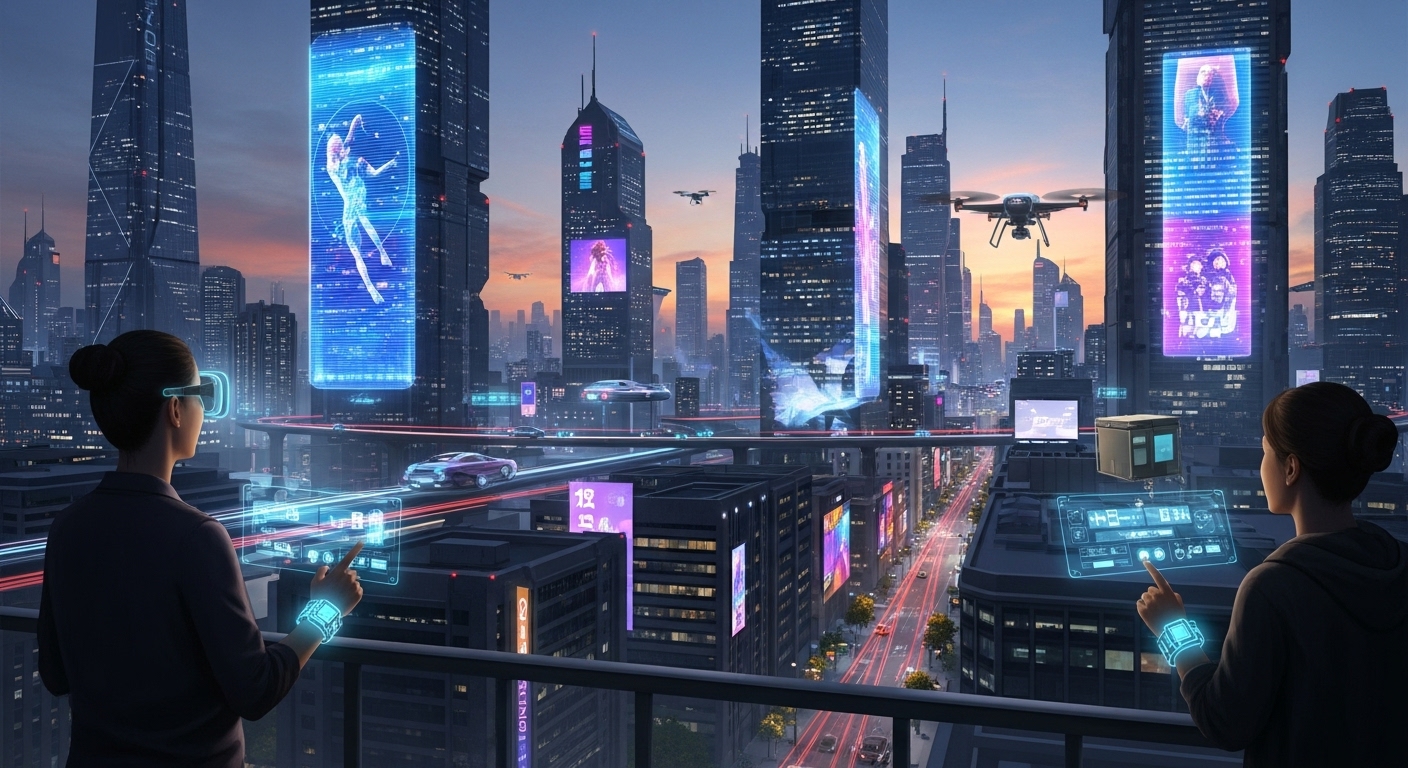
Technology is no longer just a tool that we use in our daily lives; it has become an integral part of how we live, work, and interact with the world around us. From the moment we wake up to the time we go to bed, technology influences nearly every aspect of our lives. Whether it’s the smartphones in our pockets, the smart homes we live in, or the internet that connects us to the rest of the world, it’s clear that technology has become an inescapable part of our reality.
In recent years, we’ve witnessed an explosion of technological advancements that are changing industries, reshaping economies, and transforming our relationships with one another. From the rise of artificial intelligence and the development of blockchain to the potential of quantum computing and the revolution in healthcare technologies, the future is being written in code. In this blog post, we’ll explore how emerging technologies are not just shaping the future of industries but also redefining the way we live, work, and interact with the world.
The Rise of Artificial Intelligence: Machines That Think and Learn
Artificial intelligence (AI) is perhaps the most talked-about technology of the modern era. The concept of machines capable of thinking, learning, and even making decisions used to belong to the realm of science fiction, but AI is now a reality. In fact, AI is already transforming numerous industries, from healthcare and finance to transportation and entertainment.
One of the key innovations driving AI forward is machine learning (ML), a subset of AI that allows machines to learn from data without being explicitly programmed. Machine learning algorithms are capable of recognizing patterns in data and making decisions based on those patterns. This is already being used in everything from autonomous vehicles to personalized marketing. For example, streaming platforms like Netflix and Spotify use AI-driven algorithms to recommend content based on users’ past preferences, while self-driving cars rely on AI to navigate roads safely.
In the healthcare sector, AI is revolutionizing how doctors diagnose and treat diseases. AI-powered tools are now capable of analyzing medical images, such as X-rays and MRIs, with a level of accuracy that rivals human doctors. AI is also being used to predict patient outcomes, personalize treatment plans, and even assist in drug discovery. This could lead to more efficient, personalized, and accessible healthcare solutions.
However, as AI continues to evolve, it raises important questions about ethics and job displacement. Will machines eventually replace human workers in all industries? How do we ensure that AI systems are fair, transparent, and free from bias? As AI becomes increasingly integrated into society, addressing these concerns will be essential to ensuring that its benefits are realized without unintended consequences.
Blockchain: Decentralized Trust in a Digital World
Blockchain technology, most commonly associated with cryptocurrencies like Bitcoin, is another breakthrough innovation that promises to transform industries far beyond finance. At its core, blockchain is a decentralized, distributed ledger system that allows data to be stored across a network of computers in a way that is secure, transparent, and immutable.
The most obvious use case for blockchain technology is in cryptocurrency transactions. By eliminating the need for intermediaries like banks, blockchain enables fast, secure, and low-cost transactions across borders. However, the potential applications of blockchain extend far beyond digital currencies. One of the most exciting aspects of blockchain is the concept of smart contracts—self-executing contracts where the terms of the agreement are directly written into code. These contracts can automatically execute when specific conditions are met, eliminating the need for intermediaries like lawyers or notaries.
In supply chain management, blockchain can track the movement of goods from the manufacturer to the consumer, ensuring transparency and accountability. For instance, food products can be traced from the farm to the grocery store, reducing the risk of contamination and increasing consumer confidence. Blockchain is also being explored for use in healthcare, where it could help manage patient records securely, and in voting systems, where it could ensure election integrity by providing a tamper-proof record of votes.
While blockchain holds enormous potential, its widespread adoption will require overcoming challenges such as scalability, regulatory hurdles, and energy consumption. Nevertheless, blockchain has the potential to radically reshape industries by decentralizing trust and providing greater transparency in the digital world.
Quantum Computing: A New Era of Problem-Solving
Quantum computing is another groundbreaking technology that holds the promise of revolutionizing fields ranging from cryptography to artificial intelligence. Unlike classical computers, which process information using binary digits (bits), quantum computers use quantum bits (qubits) that can represent both 0 and 1 simultaneously, thanks to the principle of superposition. This ability to process multiple possibilities at once gives quantum computers the potential to solve complex problems at speeds unimaginable for classical computers.
One of the most anticipated applications of quantum computing is in cryptography. The encryption algorithms currently used to secure digital data are based on the assumption that classical computers will take an impractical amount of time to break the encryption. However, quantum computers could potentially solve these problems in a fraction of the time, rendering current encryption methods obsolete. This presents both an opportunity and a challenge: while quantum computing could lead to breakthroughs in cybersecurity, it also raises the need for new encryption techniques to protect sensitive information in a post-quantum world.
Quantum computing also holds the potential to transform fields like drug discovery, climate modeling, and material science. By simulating molecular interactions at the quantum level, quantum computers could accelerate the development of new drugs and materials with applications in medicine, energy, and electronics. However, quantum computing is still in its infancy, and the technology faces significant technical challenges, including maintaining the delicate state of qubits and building scalable systems.
Despite the hurdles, quantum computing represents a leap forward in computational power and could lead to breakthroughs that will reshape industries and solve problems that are currently beyond our reach.
Biotechnology: Pushing the Boundaries of Human Health
Biotechnology is one of the most exciting areas of innovation, with technologies that are reshaping healthcare, agriculture, and even human biology. The ability to manipulate biological systems has the potential to cure diseases, extend human lifespan, and improve the quality of life for billions of people.
One of the most groundbreaking technologies in biotechnology is CRISPR gene editing, which allows scientists to precisely alter DNA within living organisms. CRISPR has the potential to treat or even cure genetic disorders by editing the genes that cause diseases like sickle cell anemia, cystic fibrosis, and muscular dystrophy. In agriculture, CRISPR is being used to create genetically modified crops that are more resistant to diseases, pests, and environmental stresses, helping to address food security challenges.
In addition to gene editing, bioprinting is an emerging field that uses 3D printing technology to create living tissues and organs. This could one day lead to the creation of custom-made organs for transplant, addressing the global shortage of donor organs and saving countless lives. Biotechnology is also revolutionizing drug development, with advancements in personalized medicine allowing treatments to be tailored to an individual’s genetic makeup, improving outcomes and reducing side effects.
However, these advances raise important ethical and regulatory questions. As biotechnology pushes the boundaries of what is possible, society will need to grapple with issues like genetic modification, the potential for “designer babies,” and the equitable distribution of these technologies.
The Future of Work: Automation and the Changing Workforce
As technology continues to evolve, it is inevitable that the future of work will be shaped by automation and artificial intelligence. Many tasks that were once performed by humans are now being automated, from factory work to customer service. Robotics and AI systems are capable of performing repetitive and mundane tasks with greater efficiency and accuracy than humans, and this trend is expected to continue.
In industries like manufacturing, transportation, and healthcare, robots are already taking over tasks such as assembly line work, package delivery, and diagnostic analysis. While automation increases productivity and reduces costs, it also presents challenges for the workforce. As robots and AI systems take on more tasks, many jobs could be displaced, leading to concerns about unemployment and job security.
The future of work will likely involve a combination of automation and human labor. While machines may replace many jobs, they will also create new opportunities for workers with the right skills. For example, the rise of AI and data science will create demand for professionals who can design, manage, and optimize these technologies. Upskilling and reskilling will be critical to ensuring that workers are prepared for the jobs of the future.
Conclusion: Embracing the Tech-Driven Future
Technology is advancing at a rapid pace, and the innovations we are seeing today will fundamentally shape the future of humanity. From artificial intelligence and blockchain to quantum computing and biotechnology, the possibilities are endless. However, with these opportunities come significant challenges. As we embrace these new technologies, it’s essential that we consider their ethical implications, ensure they are used responsibly, and work to ensure that their benefits are distributed equitably.
The future is bright, but it’s up to us to shape it. By fostering innovation, investing in education and workforce development, and addressing the challenges that come with these technologies, we can ensure that the tech-driven future is one that benefits all of humanity.