
Technology has transcended its traditional role as a tool and has become a central part of human existence. From communication and healthcare to transportation and entertainment, modern innovations are influencing nearly every aspect of life. The pace of technological advancement is accelerating, and the transformations it brings are both profound and far-reaching.
Today, technology is no longer just about convenience; it shapes our decisions, interactions, and even the way we perceive reality. As society becomes increasingly dependent on digital systems, understanding the influence of technology is crucial to navigating its benefits and challenges.
The Origins of Human Innovation
Human innovation has a long and remarkable history. Early humans developed basic tools and fire, which allowed them to survive, hunt, and thrive. The invention of the wheel revolutionized transport, while early agricultural techniques enabled permanent settlements and the growth of civilizations.
Each generation built upon previous discoveries, gradually increasing complexity and efficiency. These incremental advances culminated in transformative periods such as the Industrial Revolution, which reshaped societies with machinery, steam engines, and electrification.
The progression from mechanical innovations to digital breakthroughs illustrates the accelerating pace of technological evolution. By understanding the past, we can appreciate the foundation upon which today’s sophisticated technologies are built.
The Digital Revolution: Computing at the Core
Computing technology serves as the backbone of modern society. Early computers were large, cumbersome, and limited in scope. Over decades, advances in microprocessors, software, and storage have created devices capable of performing complex tasks, from data analysis to real-time communication.
Personal computers democratized access to technology, allowing individuals and businesses to increase productivity and creativity. The emergence of laptops, smartphones, and tablets introduced mobility, enabling work and entertainment from anywhere.
Cloud computing represents a significant milestone in technological evolution, offering scalable storage and processing power without heavy infrastructure. By connecting computers and networks worldwide, cloud technology supports global collaboration, research, and innovation.
The Internet: Bridging Distances and Ideas
The internet has reshaped the way humans connect, communicate, and access information. It allows instantaneous communication across continents, supports e-commerce, and provides a vast repository of knowledge at our fingertips.
Social media platforms and messaging apps have revolutionized interpersonal communication, enabling real-time sharing of experiences, news, and opinions. Online education has made learning accessible beyond traditional classrooms, opening opportunities for millions worldwide.
E-commerce and digital payment systems have redefined retail, allowing businesses to reach global audiences. Telecommuting and remote collaboration tools have transformed professional landscapes, offering flexibility and efficiency in work processes.
Artificial Intelligence: The Age of Smart Machines
Artificial intelligence is no longer a futuristic concept; it is an integral part of modern technology. AI enables machines to learn, analyze data, recognize patterns, and make decisions that traditionally required human intelligence.
In healthcare, AI aids in diagnostics, predictive analysis, and personalized treatment planning. Financial institutions utilize AI to detect fraud, automate trading, and improve customer experience. Autonomous vehicles rely on AI for navigation, obstacle detection, and decision-making.
AI also enhances daily life through virtual assistants, personalized recommendations, and automated content generation. While AI offers immense benefits, it also raises ethical concerns regarding privacy, accountability, and the potential displacement of human labor.
Robotics and Automation: Redefining Work and Industry
Robotics and automation have revolutionized industries by increasing efficiency, reducing errors, and lowering operational costs. Industrial robots perform repetitive tasks with precision, transforming manufacturing processes worldwide.
Service robots are emerging in healthcare, logistics, and domestic environments. Drones perform deliveries, monitor infrastructure, and assist in disaster relief operations. Integration of robotics with AI allows machines to adapt to complex environments, interact safely with humans, and carry out sophisticated tasks autonomously.
As automation expands, workforce adaptation becomes critical. Training programs and skill development are necessary to prepare workers for technology-driven roles.
Mobile Technology and the Era of Connectivity
Mobile devices have revolutionized communication, access to information, and everyday convenience. Smartphones, tablets, and wearable devices connect people to the digital world from virtually anywhere.
Advances in mobile networks, including 4G and 5G, have enhanced speed, reliability, and global connectivity. Mobile applications support social networking, gaming, healthcare, education, and e-commerce. Telecommuting and virtual collaboration tools further integrate mobile technology into work and personal life.
The ubiquity of mobile devices has fostered a hyper-connected society where information and services are constantly accessible, reshaping lifestyles and interactions.
The Internet of Things: Intelligent and Interconnected
The Internet of Things (IoT) links devices and systems, allowing them to communicate, share data, and make autonomous decisions. Smart homes, wearable health devices, and connected vehicles exemplify how IoT enhances convenience, safety, and efficiency.
In industry, IoT enables predictive maintenance, supply chain optimization, and real-time monitoring of operations. Healthcare applications include remote patient monitoring, telehealth, and personalized care solutions. By analyzing data from interconnected devices, organizations can derive actionable insights, improve decision-making, and optimize resource management.
IoT represents the convergence of physical and digital realms, creating intelligent systems that respond to user needs in real-time.
Blockchain: Security and Transparency in a Digital World
Blockchain technology provides a decentralized and secure way to record transactions and manage data. Beyond cryptocurrencies, blockchain has applications in supply chain management, digital identity verification, smart contracts, and governance.
Smart contracts automate processes, eliminating intermediaries and increasing efficiency. Blockchain ensures data integrity, transparency, and trust, which are crucial in financial transactions and legal documentation.
As digital ecosystems expand, blockchain addresses cybersecurity concerns, protects privacy, and fosters accountability. Its adoption is redefining trust and security in the digital age.
Virtual Reality and Augmented Reality: Immersive Experiences
Virtual reality and augmented reality transform human interaction with digital content. VR immerses users in fully simulated environments, while AR overlays digital information onto the real world.
These technologies have applications in gaming, education, healthcare, and professional training. VR simulations provide immersive learning experiences and entertainment, while AR enhances navigation, shopping, collaboration, and interactive storytelling. In healthcare, these tools support surgical training, therapy, and patient rehabilitation.
The integration of VR, AR, and AI is creating new dimensions of human experience, blending physical and digital realities seamlessly.
Big Data and Predictive Analytics
Big data allows organizations to collect, process, and analyze vast volumes of information, uncovering trends and insights that drive informed decisions.
Healthcare providers use big data to predict disease patterns, optimize treatment plans, and improve patient outcomes. Businesses leverage data to enhance marketing strategies, streamline operations, and develop innovative products. Governments utilize analytics to inform policies, manage resources, and improve public services.
Combining AI with big data enables predictive analytics, automation, and real-time monitoring, empowering organizations to make proactive, data-driven decisions.
Renewable Energy and Technological Sustainability
Technology plays a key role in advancing sustainability. Renewable energy solutions, such as solar, wind, and hydroelectric power, are becoming more efficient and affordable. Smart grids and energy management systems optimize distribution and consumption, reducing environmental impact.
Sustainable innovations extend to electric vehicles, eco-friendly materials, and green manufacturing processes. AI and analytics monitor environmental conditions, forecast climate patterns, and optimize resource usage.
Technological progress is vital in addressing global challenges such as climate change, pollution, and resource scarcity, demonstrating the potential for innovation to align with environmental stewardship.
Ethical Considerations in Technological Advancement
While technology offers immense benefits, it also poses ethical and societal challenges. Cybersecurity threats, data breaches, and privacy concerns are growing issues. Automation and AI may displace jobs, necessitating workforce adaptation and reskilling.
Ethical dilemmas arise in AI development, surveillance, genetic engineering, and data collection. Ensuring equitable access to technology is critical to avoid deepening social disparities. Collaboration among governments, organizations, and individuals is essential to foster responsible innovation and ethical use.
Balancing innovation with accountability is key to ensuring technology serves humanity effectively.
Emerging Trends and the Future of Technology
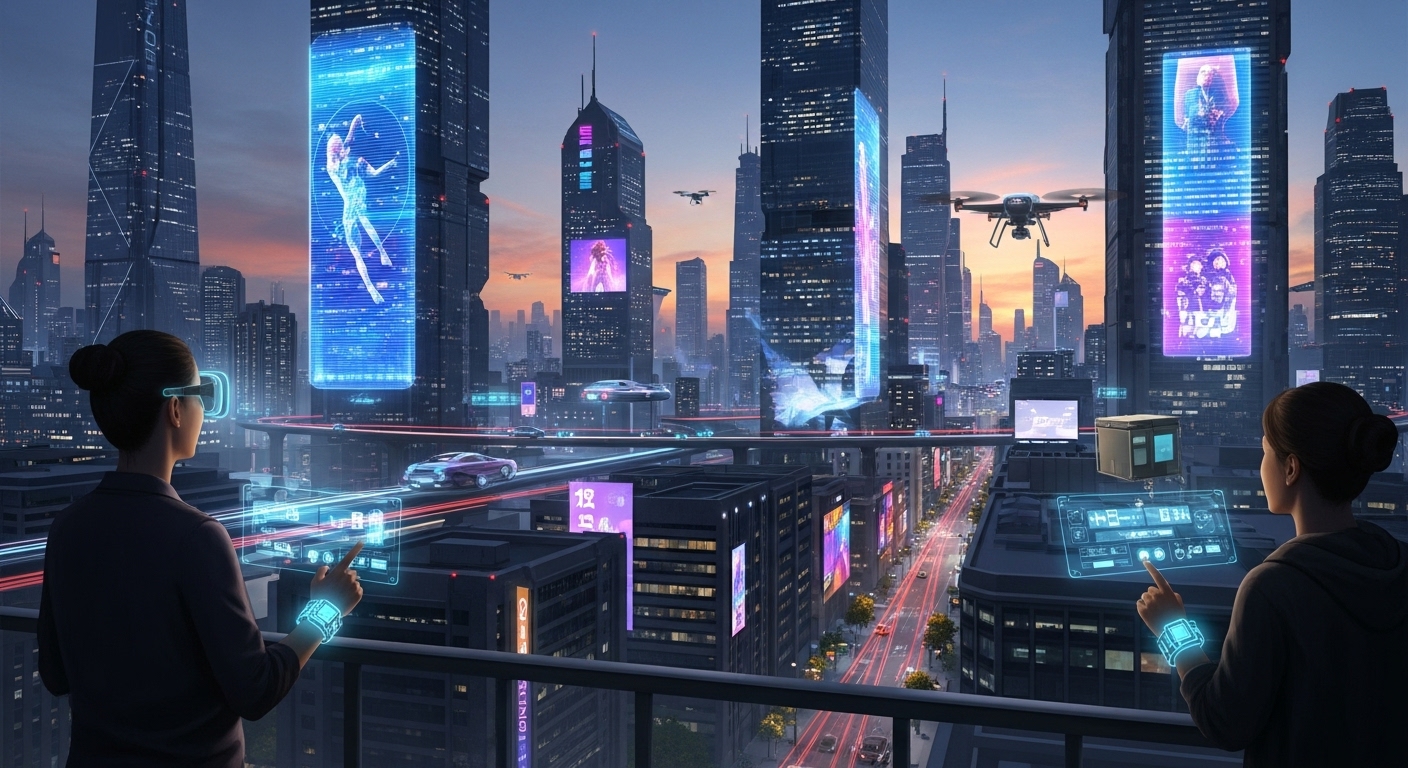
The future promises unprecedented innovation. Quantum computing, AI-driven biotechnology, autonomous systems, and advanced materials will redefine human capabilities. Smart cities, interconnected devices, and digital ecosystems will transform work, lifestyle, and social interaction.
Technological convergence will blur boundaries between physical and digital realms. Ethical frameworks, governance, and education will play crucial roles in shaping a future where technology serves humanity positively.
The potential of technology to enhance life, drive economic growth, and address global challenges is immense. Responsible adoption and continuous innovation will ensure a sustainable, inclusive, and transformative future.
Conclusion
Technology is no longer just a tool; it is a transformative force shaping human experience. Computing, AI, robotics, IoT, blockchain, VR, and sustainable technologies have created a connected, intelligent, and efficient world.
The digital era offers opportunities for creativity, collaboration, and global connectivity, alongside challenges in ethics, security, and workforce adaptation. Responsible innovation, equitable access, and ethical use are essential to maximize technology’s potential.
As the boundaries of digital and physical realities converge, technology promises a future that is inclusive, intelligent, and transformative. Embracing this future responsibly will enable humanity to leverage innovation for progress and sustainability.