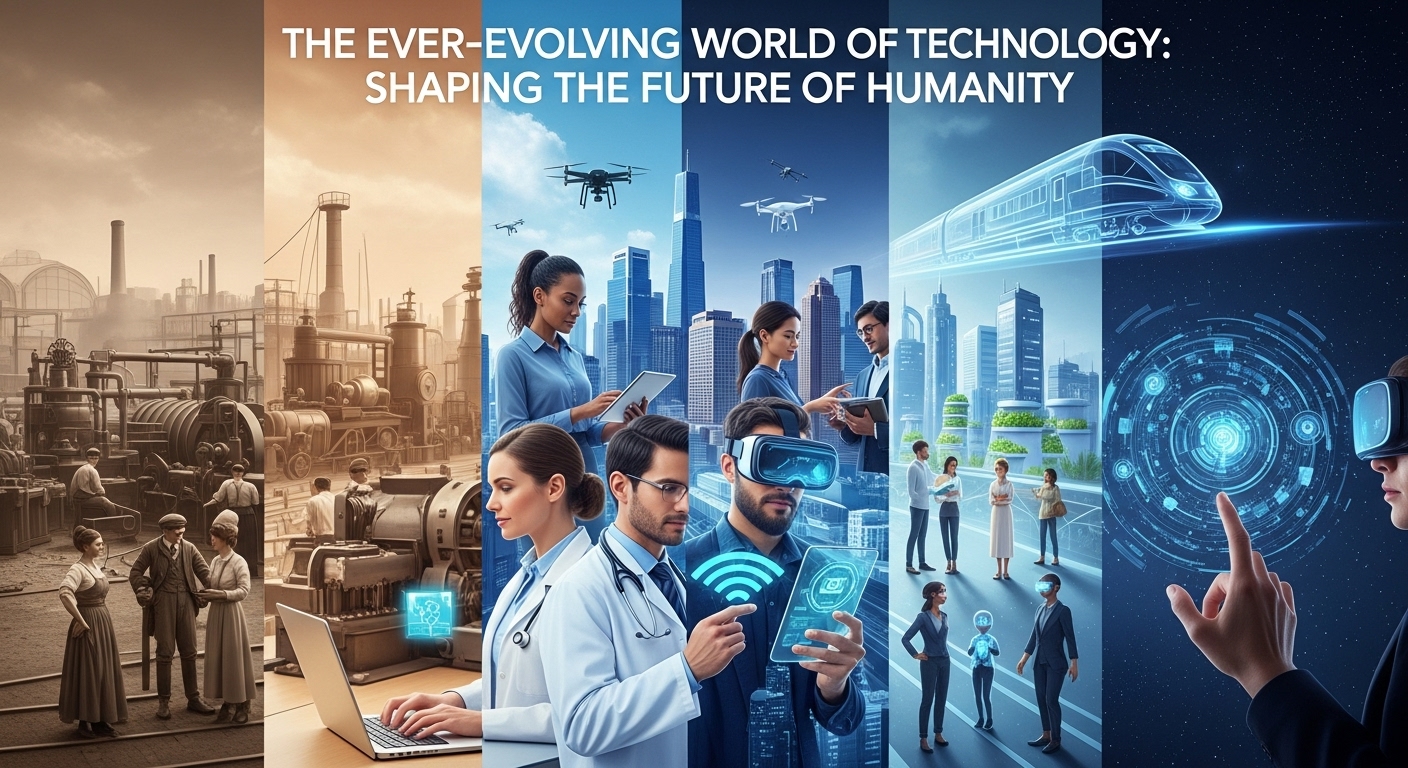
Technology has always been a driving force behind human progress, but in recent years, it has accelerated at an unprecedented pace. From artificial intelligence (AI) to blockchain and from quantum computing to augmented reality, these innovations are not just shaping industries, but also redefining the way we live, work, and interact. This blog will explore some of the most significant technological advancements, their potential applications, and the challenges they bring. It will also dive into how these innovations are poised to impact our future, offering a glimpse of the world that is rapidly unfolding before us.
Artificial Intelligence: The Heart of Tomorrow’s Innovations
Artificial Intelligence, once a concept confined to science fiction, has become one of the most transformative forces in the world today. AI refers to machines or software designed to perform tasks that typically require human intelligence, such as recognizing speech, making decisions, or solving complex problems. Over the past decade, AI has evolved at an astonishing rate, pushing the boundaries of what’s possible.
In the healthcare sector, AI is already revolutionizing diagnostics and treatment. Machine learning algorithms can now analyze vast amounts of medical data, from X-rays to genetic information, to detect early signs of diseases such as cancer and heart disease. Moreover, AI is enhancing personalized medicine by tailoring treatment plans to an individual’s unique genetic makeup. This shift could dramatically improve patient outcomes and reduce healthcare costs.
AI is also making waves in industries such as finance, where algorithms are used to detect fraudulent activity, automate trading, and optimize risk management. In the transportation sector, self-driving cars powered by AI are poised to change the way we think about mobility, with the potential to reduce accidents, ease traffic congestion, and minimize carbon emissions.
However, the rise of AI also brings with it challenges. The ethical implications of AI, including issues surrounding privacy, bias in algorithms, and the displacement of jobs due to automation, have raised concerns. As we continue to integrate AI into everyday life, it’s crucial to address these challenges to ensure that the benefits of AI are distributed equitably and responsibly.
Blockchain Technology: Redefining Trust and Transparency
Blockchain technology, often associated with cryptocurrencies like Bitcoin and Ethereum, is much more than just a tool for digital transactions. At its core, blockchain is a decentralized and distributed ledger that allows for secure, transparent, and immutable record-keeping. Each “block” in a blockchain contains data, and once it is added to the chain, it cannot be altered, ensuring that the information is trustworthy and tamper-proof.
Blockchain has the potential to revolutionize a wide range of industries. In supply chain management, for instance, blockchain can track the journey of products from production to delivery, providing transparency and ensuring authenticity. This is particularly useful in industries like pharmaceuticals, where counterfeit products can pose a significant threat to public health.
In the financial sector, blockchain is poised to streamline cross-border payments and reduce transaction fees. Traditional banking systems often involve multiple intermediaries, leading to high costs and slow processing times. Blockchain, however, eliminates the need for intermediaries, making transactions faster, cheaper, and more secure. Additionally, the use of smart contracts—self-executing contracts with the terms of the agreement directly written into code—could automate and simplify complex transactions.
While blockchain has immense potential, it also faces challenges, particularly in terms of scalability, energy consumption, and regulatory concerns. Despite these hurdles, blockchain technology is already being explored in industries ranging from real estate to healthcare, and its full impact may not be realized until a few years down the line.
Quantum Computing: The Next Frontier in Processing Power
Quantum computing is a rapidly emerging field that promises to revolutionize the way we process information. Unlike classical computers, which use bits to represent data as either 0 or 1, quantum computers use quantum bits, or qubits. Qubits can exist in multiple states at once due to the principles of quantum mechanics, such as superposition and entanglement. This allows quantum computers to perform complex calculations at speeds far beyond the capabilities of even the most powerful classical computers.
Quantum computing holds the potential to solve problems that are currently intractable. For instance, in the field of cryptography, quantum computers could break current encryption methods, prompting the need for new encryption techniques. In drug discovery, quantum computers could simulate molecular interactions in a fraction of the time it would take classical computers, leading to faster development of life-saving medications.
However, quantum computing is still in its infancy, and there are significant challenges to overcome, such as the stability of qubits and the need for ultra-low temperatures to maintain quantum coherence. Researchers are also working on developing quantum algorithms that can be used to harness the full power of quantum processors. Once these challenges are addressed, quantum computing could have transformative effects on industries ranging from pharmaceuticals to logistics and finance.
The Rise of 5G: Unleashing the Power of Connectivity
5G, the fifth generation of wireless technology, promises to revolutionize the way we connect to the internet and interact with the digital world. With significantly faster speeds, lower latency, and the ability to connect more devices simultaneously, 5G is poised to unlock new possibilities for everything from self-driving cars to smart cities.
In the realm of the Internet of Things (IoT), 5G will be a game-changer. IoT refers to the network of interconnected devices—ranging from smart home devices to industrial machinery—that communicate with each other to improve efficiency and enhance user experience. With 5G’s faster speeds and lower latency, IoT devices will be able to operate more seamlessly, creating a world where everything is connected and can respond in real-time.
5G will also play a key role in enabling advancements in augmented reality (AR) and virtual reality (VR). For AR and VR to reach their full potential, they require fast data transfer and minimal lag. 5G will provide the bandwidth necessary for these technologies to deliver immersive experiences in fields such as gaming, education, healthcare, and retail.
Despite its enormous potential, 5G also faces challenges. The rollout of 5G infrastructure requires substantial investment in new networks and equipment, and the technology also raises concerns about security and privacy. As with all new technologies, it will be crucial to address these issues as we continue to integrate 5G into our daily lives.
The Impact of Artificial and Augmented Intelligence on Jobs
As AI and automation continue to evolve, they will undoubtedly have a profound impact on the labor market. On one hand, these technologies will create new jobs in industries such as data science, AI development, and robotics. On the other hand, they will also displace many traditional jobs, particularly in sectors like manufacturing, customer service, and transportation.
Self-driving cars, for instance, could disrupt the trucking and taxi industries, potentially displacing millions of workers worldwide. Similarly, AI-powered customer service chatbots and virtual assistants could reduce the need for human workers in call centers and administrative roles. While some argue that AI will create new job opportunities in emerging fields, others worry that these transitions could lead to widespread unemployment and inequality if proper retraining and reskilling programs are not put in place.
To address these challenges, governments and businesses must collaborate to develop policies that ensure workers are prepared for the jobs of the future. This includes investing in education and training programs that equip workers with the skills needed to thrive in an increasingly automated world. By embracing these changes and preparing the workforce for the future, we can mitigate the potential negative effects of automation and create a more inclusive, technology-driven economy.
Sustainability and Green Technology: Building a Greener Future
As technology advances, so too does its potential to solve some of the world’s most pressing environmental challenges. Green technology, also known as cleantech, refers to innovations that aim to reduce the negative impact of human activities on the environment. From renewable energy solutions to sustainable agriculture practices, green technology is playing an increasingly important role in the fight against climate change.
Solar energy, wind power, and electric vehicles (EVs) are just a few examples of green technologies that are already making a significant impact. The cost of solar and wind energy has decreased dramatically over the past decade, making renewable energy more accessible and affordable for individuals, businesses, and governments. Electric vehicles are also gaining traction, with major automakers committing to transitioning their fleets to EVs in the coming years.
In addition to these well-known technologies, innovations such as carbon capture and storage (CCS), smart grids, and energy-efficient building materials are also contributing to a more sustainable future. These technologies have the potential to reduce greenhouse gas emissions, improve energy efficiency, and promote sustainable resource use across various industries.
However, the widespread adoption of green technologies faces several challenges, including high upfront costs, regulatory hurdles, and the need for infrastructure development. Nonetheless, the potential for these technologies to transform the global economy and mitigate climate change is enormous. As governments and businesses continue to prioritize sustainability, we can expect to see even more breakthroughs in green technology in the years to come.
Conclusion: Embracing the Technological Revolution
The technological landscape is changing faster than ever before, and the innovations discussed here are only the beginning of what’s to come. From AI and quantum computing to 5G and blockchain, these technologies are already reshaping industries and improving lives in ways we could never have imagined just a few decades ago.
As we move forward, it’s essential that we approach these advancements with both excitement and caution. While the potential benefits of new technologies are immense, it’s important to address the ethical, social, and environmental challenges that come with them. By working together to ensure that these technologies are developed and implemented responsibly, we can harness their full potential to create a brighter, more sustainable future for all.