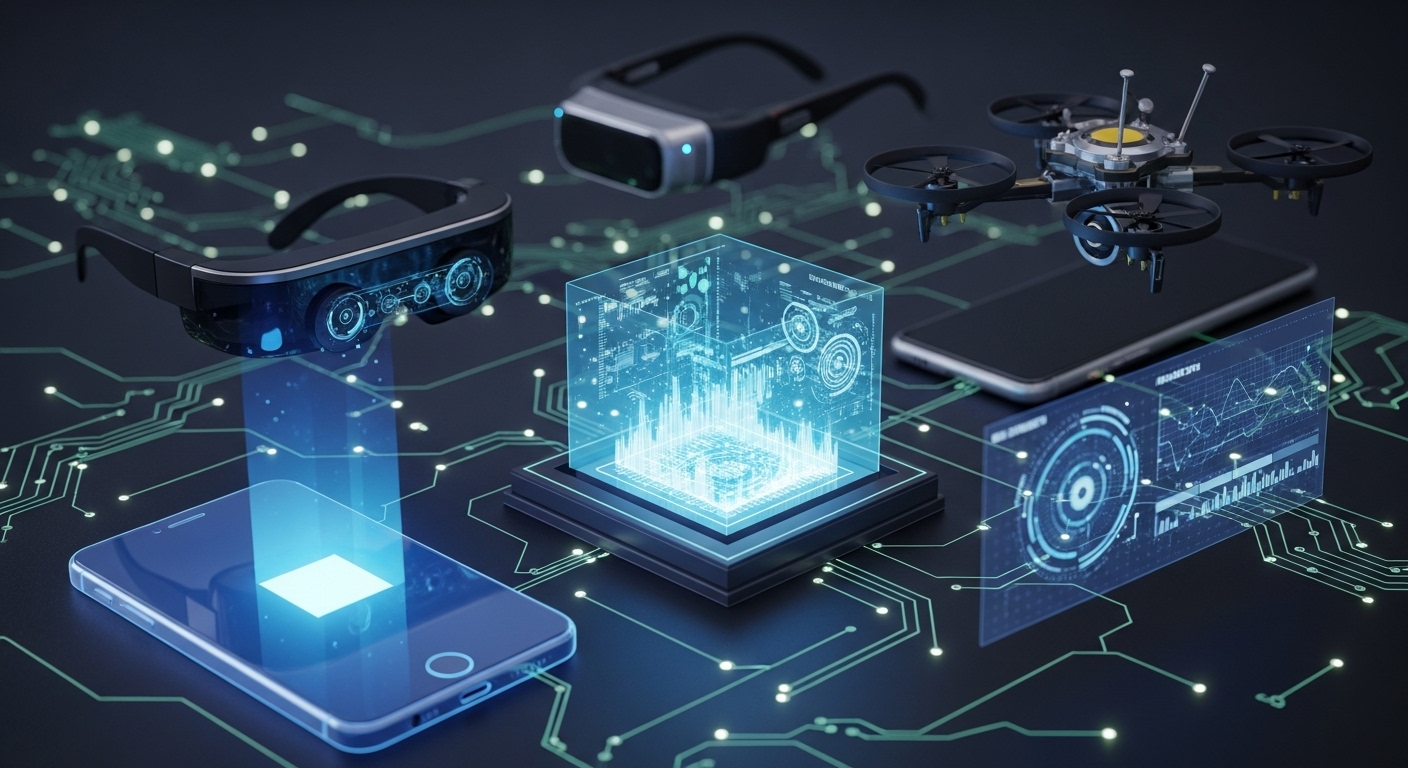

Introduction: A Glimpse into the Future of Technology
In recent decades, technology has evolved at a staggering pace, reshaping almost every aspect of human life. From the dawn of the internet to the emergence of artificial intelligence (AI), each breakthrough has introduced new possibilities, challenges, and opportunities. As we move further into the 21st century, the world stands on the cusp of another technological revolution. From quantum computing to autonomous systems, the next generation of innovations promises to dramatically alter how we live, work, and interact.
In this blog, we will explore the future of technology by delving into several emerging fields and discussing how they are poised to transform industries, societies, and even the way we think about the human experience. Whether you’re a tech enthusiast or someone who’s curious about the rapidly evolving world, understanding these trends will provide a glimpse into what lies ahead.
Artificial Intelligence and Machine Learning: The Brain of the Future
One of the most transformative technologies that has already begun to reshape industries is Artificial Intelligence (AI). But AI is no longer a distant concept—it’s already integrated into daily life, from smart assistants to recommendation algorithms on streaming platforms. However, the future of AI is far more profound.
In the coming years, AI will continue to evolve, becoming increasingly sophisticated in its ability to process and analyze massive amounts of data. With advancements in machine learning (ML), AI will not only assist with decision-making but will also be capable of making predictions, understanding context, and even generating creative content. The next generation of AI will be able to understand and interpret human emotions, leading to more personalized and adaptive experiences across sectors like healthcare, entertainment, and education.
For example, AI-powered diagnostics could dramatically improve healthcare outcomes by predicting diseases before they even manifest, while personalized learning systems could cater to individual student needs, revolutionizing education. The possibilities are endless, but the ethical implications of such advanced AI will also need to be addressed, particularly around privacy, accountability, and the potential for bias.
Quantum Computing: The New Frontier of Processing Power
While classical computers have served humanity for decades, their limitations are becoming more apparent as we push the boundaries of what’s computationally possible. Enter quantum computing—a field that holds the potential to revolutionize industries from cryptography to material science.
Quantum computers leverage the strange properties of quantum mechanics to process information in ways traditional computers cannot. Unlike binary bits, which represent data as either 0 or 1, quantum bits (qubits) can represent multiple states simultaneously, exponentially increasing computational power. This could enable machines to solve complex problems in seconds that would take classical computers millennia to figure out.
In practical terms, this means breakthroughs in drug discovery, climate modeling, and optimization problems in logistics could soon become a reality. For instance, quantum computers could simulate molecular structures to accelerate the creation of new medicines, or they could help scientists better understand and combat climate change by providing more accurate models of global ecosystems.
However, there are still many technical hurdles to overcome before quantum computing becomes mainstream. Researchers are working on building more stable qubits and scaling up quantum systems. Once those challenges are addressed, the implications for every sector of the economy will be profound.
5G and Beyond: The Next Level of Connectivity
The rollout of 5G networks has already begun to change how we communicate, work, and consume information. But as we look toward the future, 5G is just the beginning. The next generation of connectivity will go far beyond faster speeds and lower latency—it will enable entirely new paradigms in communication and interaction.
In particular, the combination of 5G with technologies like the Internet of Things (IoT), augmented reality (AR), and virtual reality (VR) will unlock new levels of connectivity and immersion. With ultra-low latency, 5G will allow for real-time communication between millions of devices, making smart cities and autonomous vehicles more viable than ever before. Smart homes, for example, will become truly intelligent, with sensors detecting changes in environment and automatically adjusting settings for comfort, energy efficiency, and security.
Furthermore, the immersive experiences offered by AR and VR could revolutionize industries such as gaming, training, and remote collaboration. Imagine attending a meeting or a class in a fully immersive virtual environment where you can interact with colleagues or classmates in real time, regardless of your physical location.
However, the widespread deployment of 5G and beyond also raises concerns about cybersecurity, privacy, and potential environmental impact. With so many devices connected at once, securing the data exchange will be crucial to avoid breaches and ensure that users’ privacy is maintained.
Blockchain and Decentralized Technologies: Rewriting the Rulebook for Security and Trust
Blockchain technology, best known for being the backbone of cryptocurrencies like Bitcoin, has far-reaching potential that goes beyond financial transactions. Its core principle—decentralization—holds promise for transforming everything from supply chains to healthcare to voting systems.
In a world where trust is increasingly questioned, blockchain offers a transparent and immutable way to record and verify transactions without relying on central authorities. In industries such as banking, supply chain management, and even content creation, blockchain could make processes more efficient, secure, and transparent.
For instance, in the supply chain, blockchain could track the journey of goods from the manufacturer to the consumer, ensuring that every step is documented and tamper-proof. In healthcare, blockchain could provide patients with control over their medical records, allowing them to share information with providers securely and without the need for intermediaries.
Furthermore, decentralized finance (DeFi) platforms, which leverage blockchain to provide financial services without traditional banks, are gaining traction. These platforms have the potential to democratize access to financial services, especially in underserved regions where banking infrastructure is lacking.
Despite its promise, blockchain is still in its infancy, and challenges remain in terms of scalability, energy consumption, and regulatory frameworks. As these issues are addressed, blockchain could reshape how industries operate and interact with users in fundamental ways.
Autonomous Systems: Redefining Mobility and Automation
Self-driving cars, drones, and other autonomous systems are quickly becoming a reality, and their impact on industries such as transportation, logistics, and even agriculture will be profound. These systems leverage AI, machine learning, and real-time data to perform tasks that traditionally required human intervention.
Autonomous vehicles are one of the most visible examples of this revolution. In the coming years, self-driving cars could become commonplace on our roads, transforming everything from urban planning to how we commute. These vehicles promise to improve safety by eliminating human error, reduce traffic congestion, and decrease carbon emissions by optimizing routes and driving behavior.
Beyond transportation, autonomous systems are making waves in industries such as agriculture, where drones and automated machinery can monitor crops, detect pests, and even harvest produce with minimal human intervention. This level of automation could significantly increase agricultural productivity and sustainability, addressing food security challenges in the process.
However, the rise of autonomous systems raises questions about job displacement, ethics, and the regulation of AI-driven technology. Balancing innovation with responsible development will be key to ensuring that these technologies benefit society as a whole.
The Metaverse: A Digital Universe of Infinite Possibilities
The concept of the metaverse has captured the imagination of tech enthusiasts, investors, and futurists alike. At its core, the metaverse is a virtual universe where people can interact, socialize, work, and play in fully immersive, shared digital environments. While the metaverse is still in its early stages, it is likely to become a key part of our digital future.
The metaverse combines elements of virtual reality, augmented reality, and blockchain to create a persistent, 3D virtual world. In this space, users can engage in a wide range of activities—from attending virtual concerts and events to collaborating in a virtual office environment. Digital goods, such as NFTs (non-fungible tokens), will likely play a central role in the economy of the metaverse, allowing people to buy, sell, and trade virtual assets.
While the potential of the metaverse is exciting, it also raises questions about the future of human interaction and the social impact of spending more time in virtual environments. Will the metaverse offer a new form of social connectivity, or will it deepen the divide between the digital and physical worlds? These are questions that will need to be explored as the metaverse develops.
Conclusion: Navigating the Future of Tech with Caution and Optimism
The future of technology is filled with exciting possibilities, but it is important to remember that with great innovation comes great responsibility. As we embrace these new technologies, we must be mindful of their potential consequences—both positive and negative. While AI, quantum computing, blockchain, and autonomous systems offer unprecedented opportunities, they also present challenges in terms of ethics, privacy, security, and the environment.
To ensure that the future of tech benefits everyone, it will be crucial to foster collaboration between developers, policymakers, and society at large. By approaching technological advancement with a sense of optimism, responsibility, and foresight, we can help create a future where innovation serves humanity’s best interests, rather than merely advancing at the cost of societal well-being.
As we stand at the edge of this new technological era, it is essential to think not just about what is possible, but about what is right. The future of tech is unfolding before our eyes, and it is up to us to shape it in a way that promotes equality, sustainability, and human flourishing. The journey may be challenging, but the rewards will be well worth the effort.