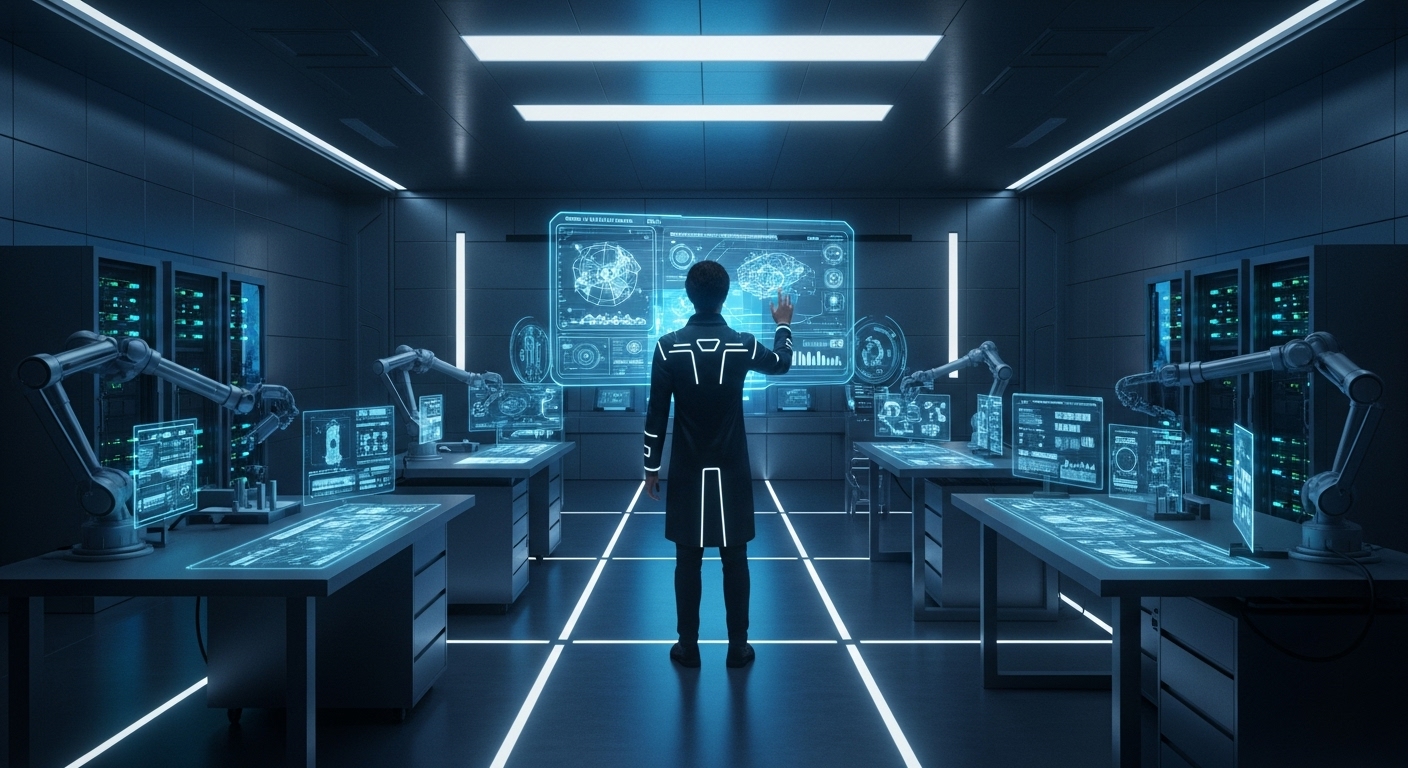

Technology is the engine driving modern civilization. From the way we work, interact, and entertain ourselves, to how we learn, communicate, and innovate, the technological landscape is transforming at an unprecedented rate. The possibilities of tomorrow are being shaped today by breakthroughs across various sectors, from artificial intelligence to quantum computing. In this post, we’ll explore some of the most fascinating and forward-looking trends in technology that promise to reshape our world.
The Dawn of Artificial Intelligence: A Leap into the Future
Artificial Intelligence (AI) is no longer a distant vision; it’s rapidly becoming an integral part of everyday life. From personal assistants like Siri and Alexa to powerful algorithms that power search engines and social media feeds, AI is transforming industries across the board. But this is only the beginning.
AI’s role in automation is reshaping work environments, enhancing productivity, and even creating new job categories. The integration of AI in sectors like healthcare, finance, and transportation is showing us that it’s not just about replacing human jobs; it’s about augmenting human capabilities to achieve previously impossible feats. In healthcare, for instance, AI-powered systems are being used to analyze medical images, predict patient outcomes, and personalize treatments, thereby improving diagnosis and care.
Moreover, AI’s potential to revolutionize creativity is exciting. With machine learning algorithms capable of producing art, music, and literature, AI is blurring the lines between human and machine creativity. While some view this as a threat to traditional forms of art, others see it as an opportunity to collaborate with machines in ways that were once unimaginable.
Quantum Computing: Unlocking the Secrets of the Universe
Quantum computing is an area of technology that promises to revolutionize how we process information. Unlike classical computers, which use bits to represent data as either 0 or 1, quantum computers use quantum bits, or qubits, that can exist in multiple states at once. This quantum phenomenon, known as superposition, allows quantum computers to solve complex problems exponentially faster than their classical counterparts.
While quantum computers are still in their infancy, their potential is enormous. For example, they could solve problems in seconds that would take classical computers millions of years. This could revolutionize fields such as cryptography, material science, and drug discovery. Imagine a world where quantum computers can model complex molecules to design new drugs or optimize global supply chains in real time.
However, there are still significant challenges to overcome, such as quantum error correction and scaling up quantum systems to make them commercially viable. But the progress made so far is remarkable, and the potential for quantum computing to solve some of humanity’s greatest challenges is undeniable.
5G and Beyond: The Race for Ultra-Fast Connectivity
The world is in the midst of a connectivity revolution, and 5G is at the center of this transformation. 5G networks promise lightning-fast download and upload speeds, lower latency, and the ability to connect an unprecedented number of devices. This will have profound implications for industries ranging from telecommunications to transportation, healthcare, and entertainment.
One of the most exciting aspects of 5G is its ability to enable the Internet of Things (IoT) on a massive scale. With 5G, billions of devices—from smart home appliances to autonomous vehicles—will be able to communicate with each other in real time, creating a truly connected world. This will pave the way for smart cities where traffic lights, waste management systems, and public transportation are all interconnected, leading to more efficient, sustainable urban environments.
Moreover, 5G will transform industries such as healthcare, where it will enable real-time remote surgeries and instant access to critical medical data. In entertainment, 5G will deliver immersive experiences, including high-definition video streaming, virtual reality (VR), and augmented reality (AR) applications, all with minimal lag.
But the rollout of 5G is not without challenges. There are concerns about the environmental impact of building new infrastructure, as well as questions around security and privacy. Nonetheless, as 5G continues to expand globally, its impact will be profound.
The Rise of Blockchain: A New Era of Digital Trust
Blockchain technology is often associated with cryptocurrencies like Bitcoin, but its potential extends far beyond digital currencies. At its core, blockchain is a decentralized and immutable ledger that records transactions in a transparent and secure way. This technology is poised to disrupt industries such as finance, supply chain management, and even voting systems.
One of the most exciting applications of blockchain is in financial services. By eliminating intermediaries such as banks and payment processors, blockchain can reduce transaction fees, increase transparency, and speed up cross-border payments. This has the potential to create a more inclusive global economy, where individuals and businesses can transact securely and efficiently without relying on traditional financial institutions.
In supply chain management, blockchain can provide greater visibility into the origin and movement of goods, ensuring that products are ethically sourced and reducing fraud. For example, consumers could track the entire journey of a product, from the farm to the store shelf, ensuring it meets their ethical standards.
Blockchain also has the potential to revolutionize voting systems by providing a secure, transparent, and tamper-proof way to cast and verify votes. This could increase trust in democratic processes and reduce the risk of election interference.
The Impact of Augmented Reality and Virtual Reality
Augmented Reality (AR) and Virtual Reality (VR) are technologies that are transforming how we interact with the digital world. While VR immerses users in entirely digital environments, AR overlays digital information onto the physical world, enhancing our real-world experiences.
The applications for AR and VR are vast. In the gaming industry, VR offers an unprecedented level of immersion, allowing players to step into fully realized digital worlds. In retail, AR is being used to create virtual try-on experiences, allowing consumers to see how clothes or furniture will look in their homes before making a purchase.
In education, VR is being used to create interactive learning environments that enable students to explore historical sites, conduct virtual science experiments, or even simulate real-world scenarios. This level of immersion makes learning more engaging and accessible to students of all ages.
Moreover, VR and AR are making waves in healthcare, where they are used for training medical professionals, providing therapy for mental health conditions, and even assisting in surgeries. For example, surgeons can practice complex procedures in virtual environments before performing them on real patients, reducing the risk of errors.
While these technologies are still evolving, their potential to change how we interact with the world around us is limitless.
The Internet of Things: A Connected Future
The Internet of Things (IoT) is a network of interconnected devices that communicate with each other to share data and perform tasks autonomously. These devices range from smart thermostats and refrigerators to industrial machines and healthcare sensors. As the IoT ecosystem continues to grow, it is becoming a key driver of innovation across multiple sectors.
In smart homes, IoT devices allow users to control everything from lighting and security systems to heating and cooling, all from their smartphones. In healthcare, IoT-enabled devices can monitor patients’ vital signs in real time, alerting doctors to potential health issues before they become critical.
In industry, IoT is driving the fourth industrial revolution, known as Industry 4.0. Factories are becoming smarter, with connected machines and sensors that collect and analyze data to optimize production processes and prevent downtime. This not only increases efficiency but also improves safety and reduces waste.
The IoT also has the potential to transform agriculture, where smart sensors can monitor soil conditions, crop health, and weather patterns, leading to more efficient and sustainable farming practices.
While IoT presents immense opportunities, it also raises concerns around data security and privacy. As more devices are connected to the internet, the risk of cyberattacks increases, and ensuring the security of these devices will be a top priority for developers and governments alike.
Conclusion: Embracing the Future with Caution and Optimism
The future of technology is both exhilarating and uncertain. As we continue to push the boundaries of what is possible, we must remain mindful of the ethical, social, and environmental implications of these advancements. While AI, quantum computing, 5G, blockchain, AR, VR, and IoT have the potential to transform our world in profound ways, we must ensure that these technologies are developed and implemented responsibly.
By fostering innovation while addressing these challenges head-on, we can create a future where technology serves humanity, not the other way around. The journey into the digital frontier is just beginning, and it’s up to us to shape it.