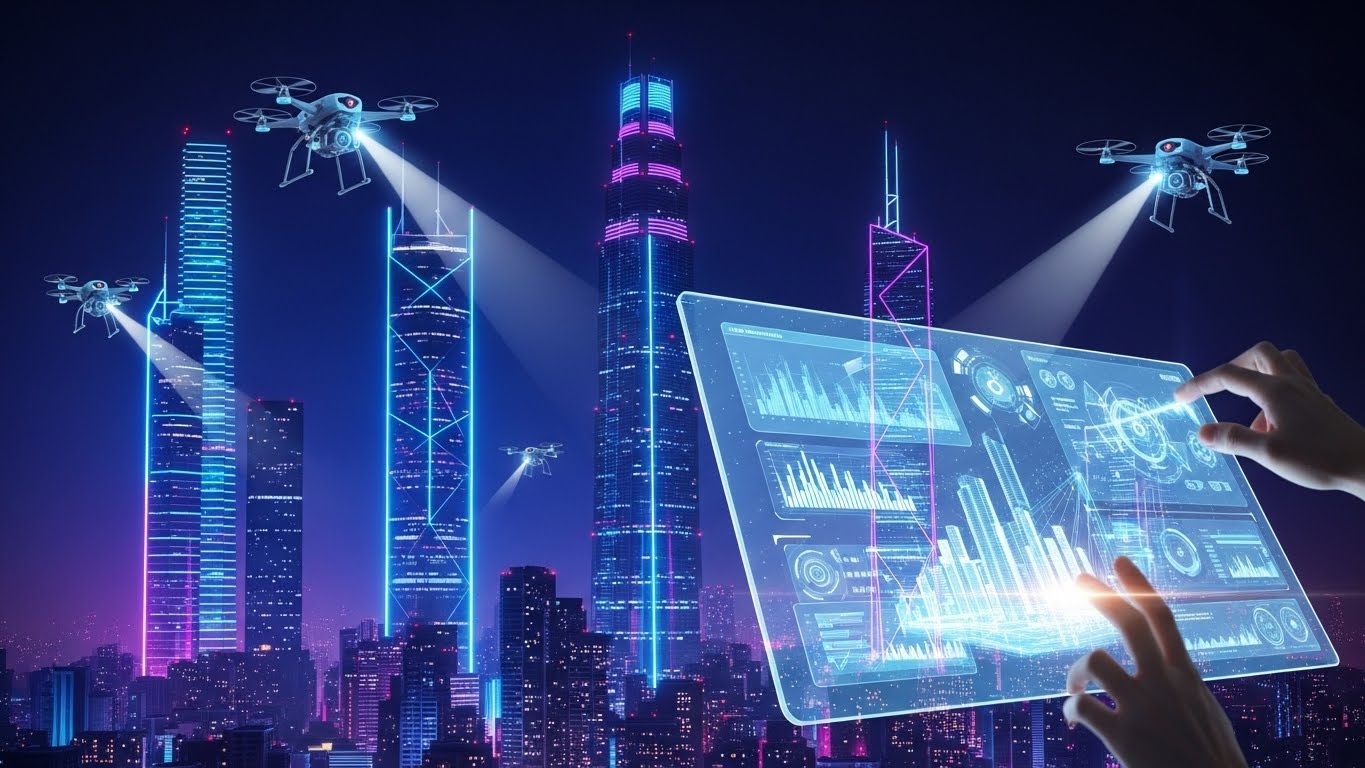

Technology is evolving faster than ever before, with innovations continuously reshaping how we live, work, and interact. As we look toward 2025, it’s clear that we’re on the brink of even more transformative changes. Whether it’s through advancements in artificial intelligence, breakthroughs in quantum computing, or the rise of immersive digital worlds, the future of technology holds immense potential. In this blog post, we’ll explore the key technological trends that are set to define 2025 and beyond.
Artificial Intelligence: The Heart of Future Innovation
Artificial intelligence (AI) is already a part of our daily lives, powering everything from voice assistants to recommendation algorithms. However, by 2025, AI will likely move beyond just assisting with tasks—it will become an integral, autonomous part of many industries.
In healthcare, AI has the potential to revolutionize diagnostics and treatment. Imagine an AI-powered system that can analyze a patient’s entire medical history, conduct real-time assessments, and suggest personalized treatments with unprecedented accuracy. AI will also assist in drug discovery, helping scientists develop new therapies at a faster pace by analyzing patterns in massive datasets.
AI’s impact will be felt across every industry, from finance and retail to education and entertainment. As machine learning models become more sophisticated, they will drive automation, enhance decision-making, and improve personalization in ways we’ve only begun to imagine. Yet, with these advancements, questions surrounding ethics, privacy, and bias in AI systems will need to be addressed.
Quantum Computing: The Power to Solve the Impossible
Quantum computing is no longer a distant dream—it’s quickly becoming a reality. Unlike traditional computers, which process information in binary (1s and 0s), quantum computers use quantum bits (qubits) that can exist in multiple states simultaneously. This ability allows quantum computers to perform complex calculations at a speed and scale that classical computers simply can’t match.
By 2025, quantum computing is expected to make significant strides in fields like cryptography, artificial intelligence, and drug discovery. For example, quantum computers could potentially break encryption methods that have protected sensitive data for decades, creating a need for new, quantum-resistant security protocols. In healthcare, quantum computing could accelerate the discovery of new treatments by simulating molecular interactions in real-time, a process that would take classical computers far longer to achieve.
While quantum computing is still in its infancy, by 2025, we could see the first real-world applications emerge, offering the potential to solve problems that were previously thought impossible.
5G and Beyond: A New Era of Connectivity
The rollout of 5G networks is already underway, and by 2025, the technology will have become mainstream, drastically improving the speed and reliability of mobile internet. With download speeds up to 100 times faster than 4G, 5G will usher in an era of ultra-low latency and high capacity, enabling new applications across a variety of industries.
For consumers, 5G will mean faster streaming, smoother video calls, and more reliable mobile connections. But the impact will go beyond just personal convenience. The true potential of 5G lies in its ability to support the growing Internet of Things (IoT), connecting billions of devices and enabling them to communicate with one another seamlessly. This hyper-connectivity will unlock innovations in smart cities, autonomous vehicles, and remote healthcare.
Moreover, 5G will be critical in advancing technologies like augmented reality (AR) and virtual reality (VR), which require fast, low-latency networks to deliver immersive experiences. By 2025, 5G will enable real-time, high-quality VR gaming, remote work environments, and virtual meetings that feel as real as face-to-face interactions.
Biotechnology: Transforming Healthcare and Beyond
Biotechnology is another field that is poised to undergo significant growth in the next few years. With advancements in gene editing, personalized medicine, and wearable health tech, the future of biotech promises to bring about revolutionary changes in healthcare.
One of the most promising areas of biotech is gene editing. Technologies like CRISPR have already shown the potential to edit genes with incredible precision, opening up new possibilities for treating genetic disorders, enhancing crops, and even fighting diseases like cancer. By 2025, gene therapy could become a mainstream treatment for conditions that were once considered untreatable.
Wearable devices, such as smartwatches and fitness trackers, will also continue to evolve. These devices will not only track basic health metrics like steps and heart rate, but also monitor more complex health data, such as blood sugar levels, hydration, and even early signs of diseases like Parkinson’s. The rise of these technologies will empower individuals to take greater control of their health and wellness.
The Growth of Immersive Digital Worlds
The future of technology isn’t just about faster computers and smarter algorithms—it’s also about how we experience the digital world. Virtual reality (VR) and augmented reality (AR) are already starting to blur the lines between the physical and digital worlds, and by 2025, these technologies will become even more immersive and integrated into our daily lives.
VR will offer entirely new forms of entertainment, from immersive video games to virtual concerts and social spaces. With the help of 5G and more powerful computing devices, VR experiences will become more realistic, interactive, and accessible. In the workplace, VR could revolutionize training and collaboration, allowing employees to work together in virtual environments, regardless of location.
AR, on the other hand, will bring digital content into the real world, enhancing our interaction with our surroundings. Imagine using AR glasses to navigate a new city, getting real-time information about your surroundings, or overlaying digital objects on the real world for design and construction purposes. By 2025, these technologies will become more seamless, intuitive, and ubiquitous, allowing us to interact with our environments in ways that were once the stuff of science fiction.
Ethical Considerations in the Age of Tech
With all these technological advancements come important ethical considerations. As we move toward a future dominated by AI, quantum computing, and biotech, it’s crucial that we think carefully about the societal impact of these innovations.
Issues like privacy, data security, and job displacement will continue to be at the forefront of these discussions. For instance, as AI takes on more decision-making roles, how do we ensure that these systems are fair, transparent, and free from bias? With the rise of genetic editing, what ethical boundaries should we set for modifying human DNA? And as automation becomes more widespread, how do we ensure that workers aren’t left behind?
By 2025, we will need to have clear frameworks in place for addressing these challenges, ensuring that technology is developed and deployed in a way that benefits society as a whole, while minimizing harm.
Conclusion: The Road Ahead
The future of technology is both exciting and daunting. As we move toward 2025, the innovations that are already on the horizon—AI, quantum computing, 5G, biotechnology, and immersive digital experiences—will drastically alter how we live, work, and interact with the world around us. These advances hold the promise of solving some of humanity’s biggest challenges, from healthcare to climate change, and creating new opportunities for growth and connection.
However, with this progress comes responsibility. As we embrace these innovations, we must also consider their ethical implications and ensure that they are used to benefit all of humanity, not just a select few. The road ahead is full of possibilities, and it’s up to us to shape the future of technology in a way that fosters progress, equity, and sustainability. The tech of 2025 is only the beginning of what we can achieve in the coming decades.