
In a world that seems to be changing at the speed of light, technology plays a pivotal role in shaping how we live, work, and connect with each other. From the devices in our pockets to the complex systems that run entire industries, technology is not just a tool—it’s a force that influences nearly every aspect of our daily lives. In this blog, we’ll explore how technological advancements are impacting various sectors, what innovations are on the horizon, and how we can navigate this fast-evolving landscape.
The Rise of Artificial Intelligence: Revolutionizing Every Industry
Artificial intelligence (AI) has been one of the most significant technological developments of the 21st century. It’s no longer just a buzzword; AI is embedded in countless applications that we interact with every day. From voice assistants like Siri and Alexa to complex algorithms used in healthcare, AI is transforming industries in profound ways.
In healthcare, AI is improving diagnostics, personalizing treatment plans, and even predicting disease outbreaks. In finance, machine learning models are detecting fraudulent activity with unmatched accuracy. Meanwhile, autonomous vehicles are becoming a reality, with AI systems at the heart of self-driving technology. As AI continues to evolve, its applications will only expand, making it a central part of both personal and professional life.
However, with this rapid advancement comes a need for responsible implementation. While AI offers incredible potential, it also raises ethical questions about privacy, job displacement, and bias in algorithms. Navigating these challenges will be crucial as we integrate AI further into our world.
The Internet of Things (IoT): Connecting the World Around Us
Imagine waking up to a home that adjusts the temperature and lighting based on your preferences before you even leave your bed, or a car that knows your preferred route and adjusts traffic navigation accordingly. These are not scenes from a science fiction movie but everyday applications of the Internet of Things (IoT).
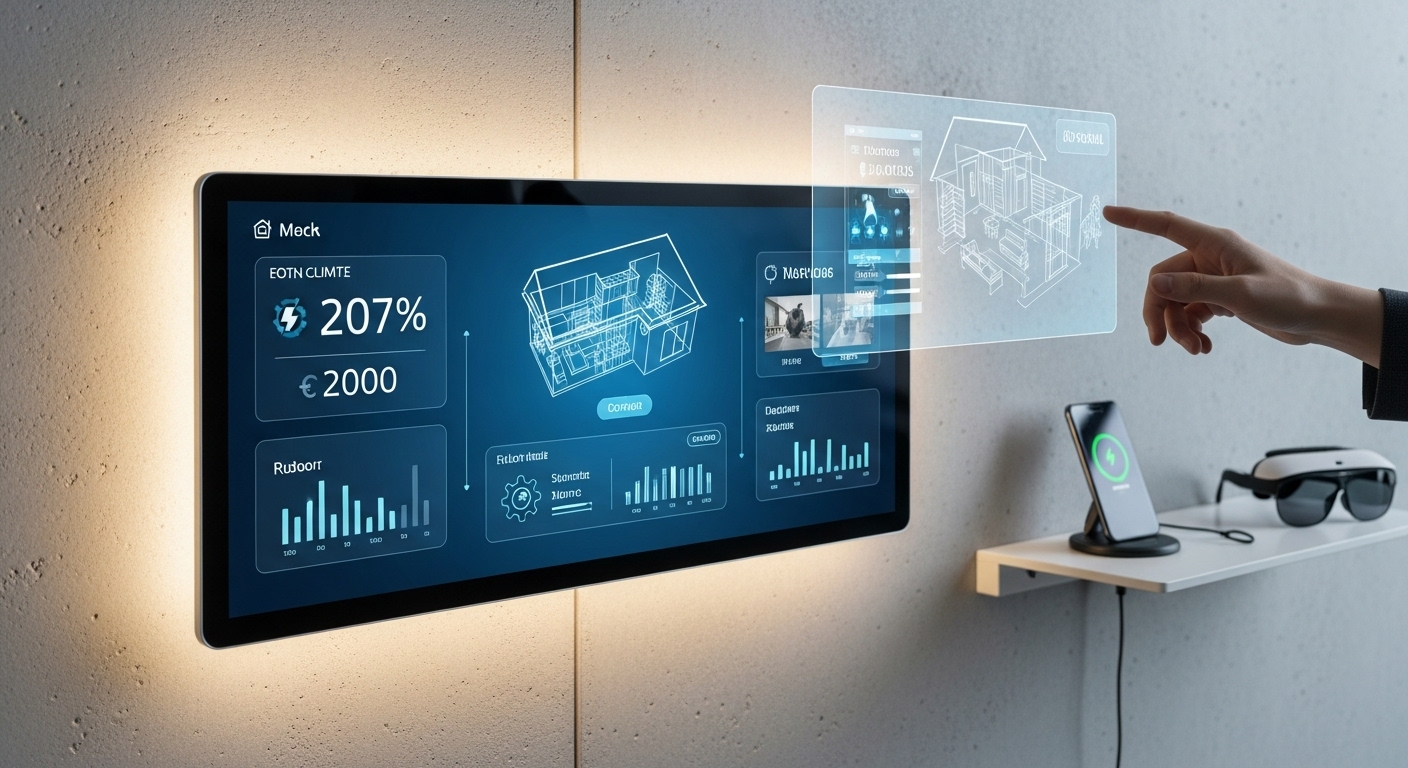
IoT refers to the network of physical devices—such as appliances, vehicles, and wearables—interconnected through the internet. This ecosystem allows devices to collect and exchange data, offering more convenience, efficiency, and personalization. Smart homes, where everything from refrigerators to security cameras is connected, have become increasingly popular, providing both comfort and energy savings.
In industries like manufacturing, IoT is optimizing processes by allowing machines to communicate and predict maintenance needs. As IoT technology becomes more advanced, it has the potential to revolutionize everything from agriculture to urban planning, creating “smart cities” where infrastructure is more efficient and sustainable.
Blockchain Technology: Redefining Trust and Transparency
Blockchain technology, the backbone of cryptocurrencies like Bitcoin, is slowly making its way into industries far beyond finance. The core idea behind blockchain is simple but powerful: it’s a decentralized and immutable ledger that allows data to be securely recorded and shared across multiple parties without the need for a trusted intermediary.
In finance, blockchain has the potential to reduce fraud, streamline cross-border transactions, and eliminate the need for intermediaries like banks. But its applications extend far beyond cryptocurrencies. In supply chains, blockchain can track products from origin to destination, ensuring transparency and reducing the risk of fraud. In healthcare, it can securely store patient records, giving patients control over their own data.
Despite its promise, blockchain is still in the early stages of widespread adoption, and there are challenges to overcome, such as scalability and energy consumption. However, its potential to transform how we think about trust and data privacy is undeniable.
Virtual and Augmented Reality: Blurring the Line Between Digital and Physical Worlds
Virtual reality (VR) and augmented reality (AR) are two technologies that are reshaping how we interact with the world around us. VR immerses users in a completely digital environment, while AR overlays digital information on top of the real world. Both are revolutionizing industries ranging from gaming and entertainment to education and healthcare.
In gaming, VR has taken the experience to a whole new level by allowing players to step inside their favorite games. In education, VR enables immersive learning experiences that were once impossible—students can explore ancient civilizations, dive into the depths of the ocean, or even travel to space, all from their classrooms.
AR, on the other hand, is enhancing everyday activities. In retail, AR allows customers to try on clothes virtually or visualize how furniture would look in their homes. In healthcare, AR is being used for surgical planning, helping doctors visualize complex procedures before they operate. As both VR and AR technologies evolve, they will become increasingly integrated into our daily routines.
5G Connectivity: The Backbone of Future Innovation
5G is not just a faster version of 4G; it’s a transformative technology that will unlock a whole new level of connectivity. With speeds that are up to 100 times faster than 4G, 5G promises to enable innovations that were previously unimaginable.
For consumers, 5G means faster download speeds, more reliable connections, and lower latency for real-time applications like gaming, video streaming, and remote work. But the real impact of 5G will be felt in industries like healthcare, manufacturing, and transportation. For example, 5G will enable real-time remote surgeries, autonomous vehicles to communicate instantly with each other, and the ability to manage complex networks of IoT devices.
However, the rollout of 5G is not without challenges. The infrastructure required to support 5G networks is costly and complex, and there are concerns about security and data privacy as more devices become connected. But as 5G becomes more widespread, it will undoubtedly serve as the backbone for future technological advancements.
Cybersecurity: A Growing Need in a Digital World
As our lives become increasingly digitized, cybersecurity has never been more critical. With more data being shared online, the risk of cyberattacks, data breaches, and identity theft continues to grow. In a world where personal, financial, and business information is stored and transmitted digitally, securing that data is paramount.
In response to this growing threat, there has been a surge in the development of advanced cybersecurity tools, from AI-driven threat detection to blockchain-based security protocols. Companies are also investing more in training employees and adopting more robust cybersecurity policies to mitigate risks.
As technology continues to advance, so too must our methods for protecting it. Staying ahead of cyber threats will require constant innovation and a proactive approach to security.
Conclusion: Embracing the Future of Technology
The technological landscape is evolving faster than ever before, and its impact is felt in nearly every facet of our lives. From artificial intelligence and blockchain to virtual reality and 5G, the future of tech promises to be both exciting and challenging. While these innovations have the potential to improve our lives in countless ways, they also require careful consideration of their ethical, social, and environmental implications.
As we continue to embrace new technologies, it’s essential to think critically about how they shape our world and how we can harness their potential for the greater good. The future is now, and how we navigate it will determine the world we live in tomorrow.